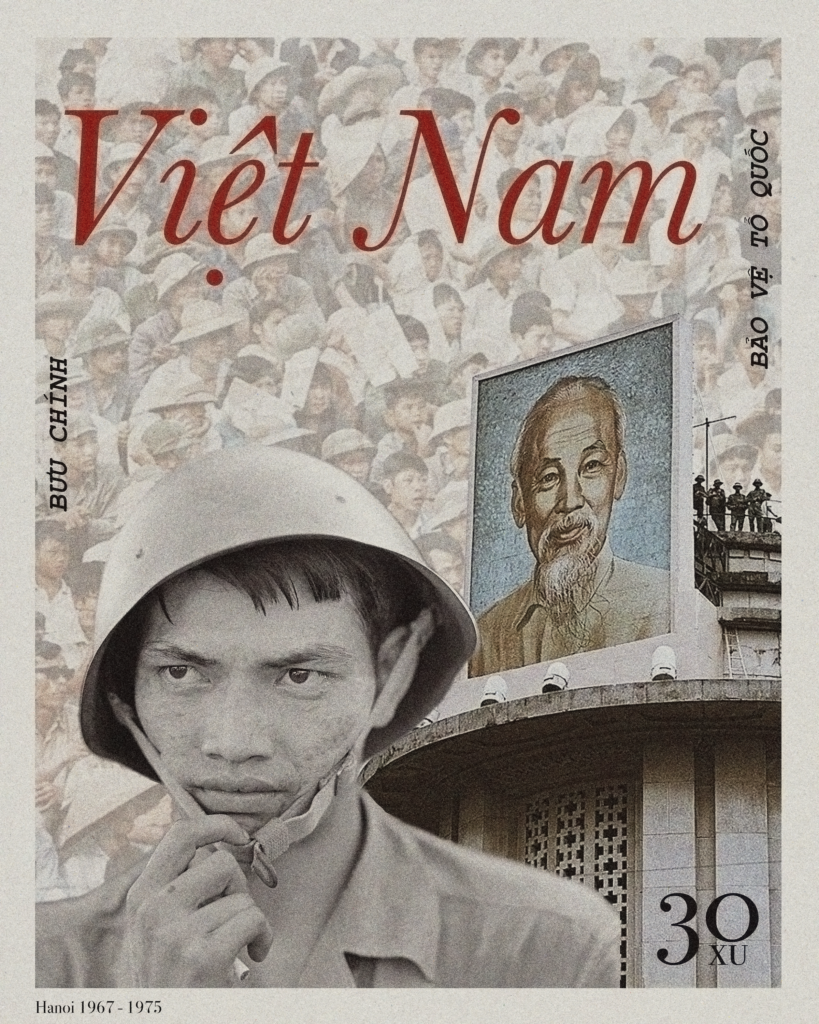
In the article “In Defense of the Poor Image”, Hito Steyerl gave her insightful opinions on the subject of the poor image specifically and the media landscape in general. To summerize in my understanding, she states that many great works of visual art and cinema are “expelled from the sheltered paradise”, lost and forgotten because of their inferiority to sharper and higher-resolution media. In my opinion, the issue she raised is definitely thought-provoking and educational, and I agree, as a young learner of the arts and media, that I do not have access to or given the knowledge of such “poor images”, despite the fact that they could be great works. Nowadays, it is common to see mainstream media promoting the high-quality, high-budget media while those of a lower level of technical quality, like Steyerl said, are invisible. And it is quite unfortunate.
However, on the other hand, in today’s landscape, with the giant “dump” that is the Internet today that social media has created, it is safe to say that even if such poor images are unearthed and published, they would just be another grain of sand in the desert. Moreover, although I concede that some of the media that is hidden could possible worthwhile works of art, it is much more likely that the majority of it would just be media. Therefore, even if somehow, we are able to make them float to the surface of popularity, how much of it would actually be appreciated, and then, would the pursuit even be worthwhile. Fortunately, I think that the wider audience are not becoming somewhat tired of the repeated mainstream media, and are now starting to open up and appreciate more niche or “underground”, “indie” works and artists. Production studios, such as A24, are now empowering young independent creators, and I believe that they are diving into the archives of media to modernize unrecognized works and popularize them to a mainstream audience. Therefore, although I agree with Steyerl that in this gigantic black hole of the Internet, many works, though great, can just vanish into oblivion, I believe that there are ways we can save and appreciate them if we put in the effort.
Reading Response: Week 11
“I’m telling you the story of the Mammoth Cave, of Stephen Bishop and Patricia Crowther and her husband Will, heartbroken as he memorialized their adventures in code, as a way of reminding you that every technological object, be it a map or a computer game, is also a human artifact.” Having read Broad Band by Claire L. Evans, this quote stuck with me. First of all, it is always interesting to gain insight into the context of any given piece of culture, and to learn the story that birthed it. In my mind, I always thought that any creative work, either art, music, or technological invention, is only truly significant when it has a story attached to it. Without, a painting would just be slabs of color on a canvas, a song, a series of well-organized sounds, without meaning. Therefore, for me, Adventure is not only an important piece within the puzzle of technology, computer science, or video games, but also an amazing piece of art. As Evans stated, Will Crowther built the game not for commercial purposes, not as a product, but rather as memorabilia for the memories he shared with his ex-wife. His sister was the first tester of the game, and its first official audience was his daughters. As mechanical and technological as this invention was, in its core, it stemmed from love and meaning.
Moreover, I believe this story is evermore relevant, especially with the rise of Artificial Intelligence. In a time where AI technology can produce art pieces just as well or even better than humans, the works it produces have become indifferentiable from those of man. Nonetheless, however aesthetically pleasing or “perfect” AI art can be, it would lack a story, a depth, a meaning that human art possesses. A human-made work would not only hold an aesthetic value, it is proof of its creator’s emotions and life, like that of Will Crowther and Adventure. In conclusion, I believe that the story behind the game and that of Patricia and Will Crowther is not only an inspirational story, but also a testimony of the inseparable connection between human emotions and our act of creation.
On ‘Blackout Tuesday’
The story on ‘Blackout Tuesday’, to me, is a great indication of how powerful a tool media, specifically social media, can be. This was first demonstrated when the ‘Black Tuesday’ social media posts started drowning out and obscuring the activists’, fundraisers’ and action-takers’ posts. Though started with good intentions (to promote reflection and spread awareness regarding systematic racism), the campaign and its partakers were unconsciously hindering the efforts of many other pro-Black voices and allies. This shows that anything on social media platforms can gain popularity with incredible and can spread like wildfire, especially, with a bit of ignorance, something bad. However, in this same story, we also the magic wand of media being used for good as well. Realizing the true effect of the campaign she has participated in, author Noor Noman seeks out to reconcile for her mistake by taking real action, instead of just spreading a black image. “I sent my contacts an email template addressed to the Minneapolis Police Department, demanding all four of George Floyd’s killers be held accountable — an email I sent, myself. Then I found and changed my Instagram bio to a link that produced an automatically generated email, demanding accountability over Breonna Taylor’s killing — another email I sent… ,” she wrote. Noman was able to contribute to the cause with actual quantifiable actions, sitting in her own home, and this truly emphasizes the power of media and technology, how it empowers people to do things that in the past, you could only do in person, to leave an impact while staying in place. Therefore, I think this story truly portrays the power of media, and how it can be used both to humanity’s good, and against it.
Moreover, what really stuck out to me about the story is how media had been able to form its own reality, a reality different from our traditional, natural, objective reality. Nonetheless, this reality fabricated through use of media has weaved into our natural reality, literally affecting it and us humans as well. This is another example supporting the idea of post-modernism, how the evergrowing reality of media and digital culture has created a new layer above our old reality, and mashing them together. This shift has been discussed greatly in fields such as philosophy, psychology, sociology, art, history, etc.’, and whether this emergence of this new inter-subjective reality is good or bad is still up for debate.
Reading Response: Week 5
Through the podcast, I have realized the magic within the tool that is “media”.
First and foremost, it can be spread with great magnitude. Digital in nature, a good piece of media can be shared to every corner of the globe and affect a grand audience, no matter the geographical circumstances.
Moreover, technology also makes collaboration plausible anywhere, between anyone.
Not only does digital media help amplify stories and change a great audience’s perspectives, it also immortalizes the story, maintaining and safekeeping it through time.
In addition, quite interestingly, the podcast made me realize the impact that digital media and technology can have on the environment. As I mentioned, with technology helping people connect wherever they are, they bridge them geographically, reducing the amount of travel needed by humans in general and help decrease our carbon footprint.
Guy Debord’s ‘The Society of the Spectacle’: An analysis in the “Tiktok” era
In the ‘The Society of the Spectacle’, Guy Debord speaks on the market economy, and how, using a tool titled “the Spectacle”, it has “distracted and pacified the masses”. According to Debord, “in societies where modern conditions of production prevail, all of life presents itself as an immense accumulation of spectacles. Everything that was directly lived has moved away into representation.” So, what does this mean? And what really are “Spectacles”? To my interpretation, the rapid spread of the economy as well as its accompanying capitalistic mindset has captivated the minds of all members of our society, from producers to consumers, celebrities, politicians to artists, all manipulated by this movement. And to Debord, Spectacles are the elements that caused this. A Spectacle can be any form of media, from a piece of advertisement on the front page of the local paper in Debord’s time, to a billboard you encounter today on the face of a building in Times Square, New York City. In today’s world, specifically, it would be impossible to live a minute without interacting with one; nowadays, Spectacles are advertisements, marketing campaigns, the entertainment industry, film and television, social media, etc., everywhere, inevitable. These are illusions, created for the pursuit of economic gain, that continually “manufacture new desires and aspirations”, luring us all to produce more, sell more, buy more, and consume more. Not only that, they create unrealistic expectations, fueling our already insatiable nature and limitless greed. Celebrity endorsements and marketing campaigns blurs our conscious visions as consumers; they misguides to spending money on things we don’t need. Self-proclaimed “gurus” with their 6-figure income urge us to venture into industries and businesses that we barely have any knowledge on. Social media dictates our views of the “perfect” life, of our “perfect” selves, our “perfect” family, our “perfect” money, etc. . Spectacles have fabricated a reality above our traditional objective reality and successfully misled us to unconciously adopt this new version, and it is distressing. Therefore, I believe that, in this time of digital prominence where everyone is just confused, Debord’s ‘The Society of the Spectacle’ is a good call for awakening and consciousness.
On Modernism and Post-Modernism (Part 1)
Throughout time, the term “artist” has been used to describe an everchanging character. During the Victorian period, it would be coined to describe painters, sculptors, etc., practitioners of so-called “high-art”. However, in today’s world, there is barely a concrete definition of an artist. This is somewhat understandable, in my opinion. As Faye Ran expressed in “Media Ecology and the Arts”, “the arts are indispensable tools for understanding the human condition. … even works of art which seem timeless and universal are characterized y definite conditions of production, circulation and reception,… .” In a way, this could mean that artists are merely interpreters and expressionists of their reality. And over time, our reality, if such a thing even exists, has changed drastically, leading to a corresponding shift in the supposed role or purpose of an artist. Moreover, one of the most important changes not only in the realm of art but also in history, sociology and philosophy is the emergence of the idea that is “post-modernism” from “modernism.
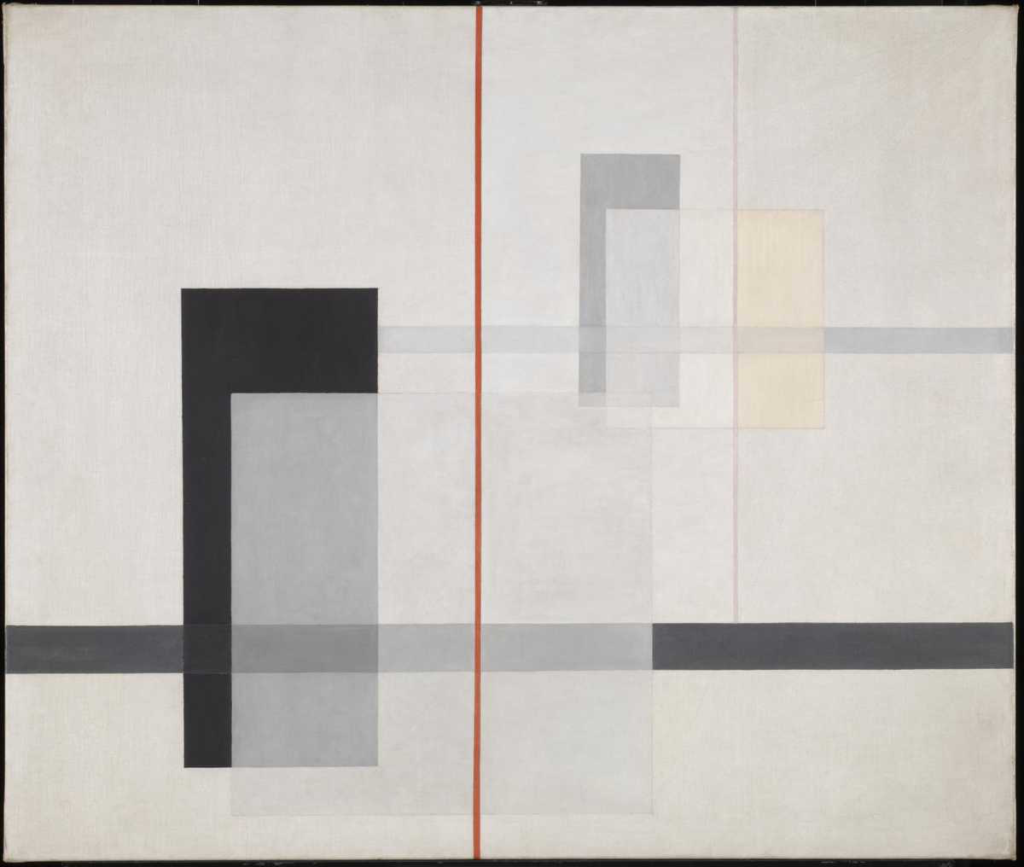
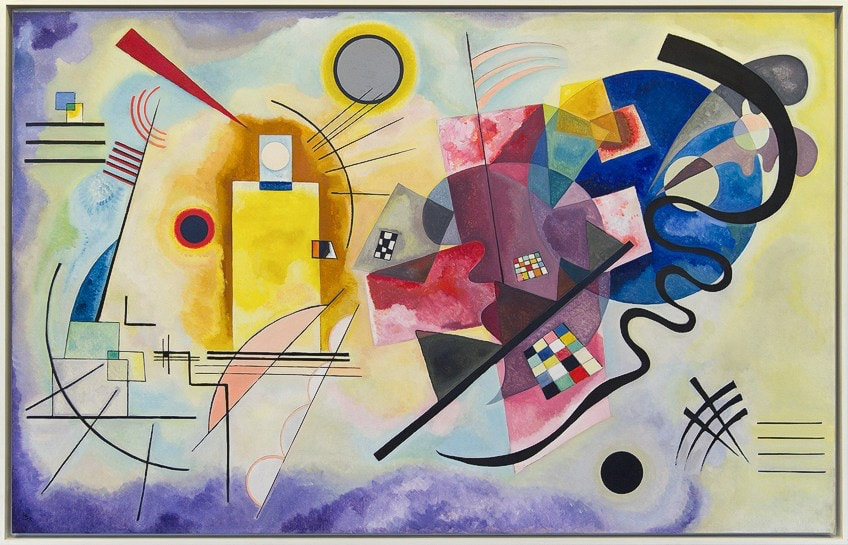
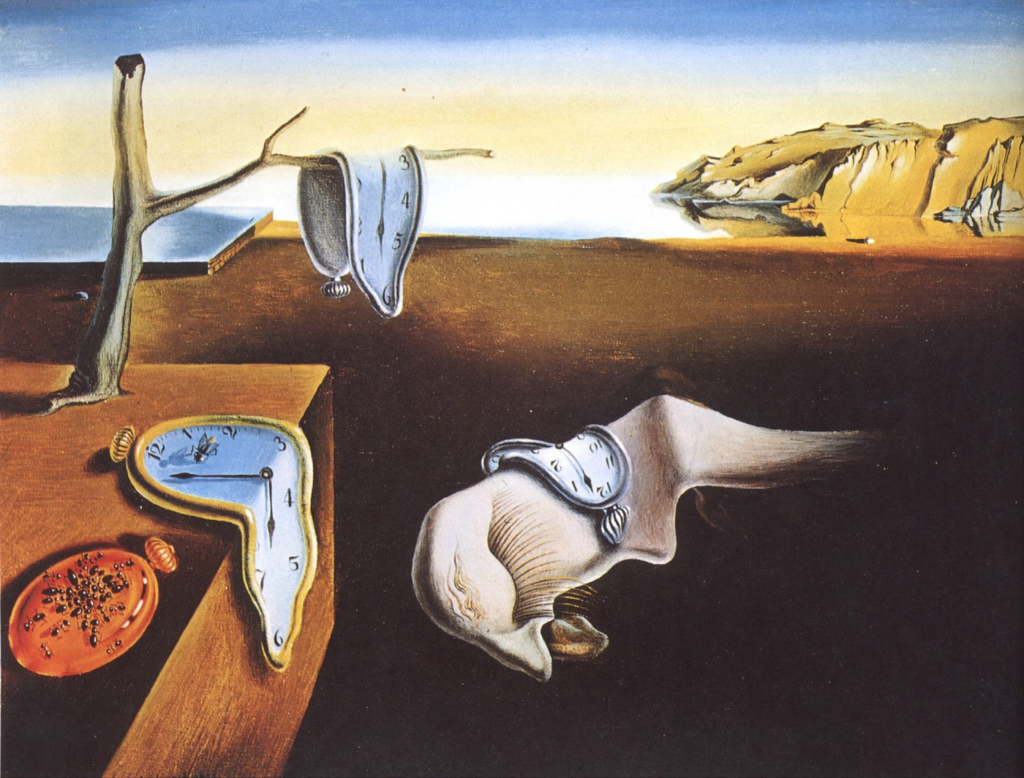
Before we dive into the analysis of these concepts, we must first understand what they mean. So firstly, what is modernism? Historically, the period of modernity extends from the late 19th century to the first half of the 20th century, from the French Revolution to the start of the first World War. However, in the eyes of Michel Foucalt, modernity is “more of an attitude than as a historical period.” It aligns with the experience and values of industrial life, signifying a rejection of traditions and the yearning for progress, science, individualism and utopia. The period in which modernism thrived was a period of idealism and audacious dreaming. And such a philosophical change bled into the fabrics of artistic expression. Artists influenced by modernism refused to follow the conservative principles of the past like the worship of realism; instead, they challenged it by leaning towards techniques, materials and processes that provoked abstraction. As said in “Media Ecology and the Arts” about this period, “the photographic medium and concomitant notions of veracity and instantaneity would increasingly be seen and interpreted as a challenge to mimetic art forms and movements (i.e., realism and naturalism), and to their authority and standards in matters of presentational and representational truth… .” Moreover, attitude-wise, modernist artists expressed their hope for the ideal human life and society, as well as a belief in progress. These attributes can be seen prominent in the shapes in Laszlo Moholy-Nagy’s or Wassily Kandinsky’s paintings, or the surrealist world in that of Salvador Dali.
Modernist artists, holding the spirits of modernity, are groundbreaking innovators, fearless explorers, and pure hopefuls of the future.
However, as history progresses, the vision that is Modernism appears to be increasingly hollow. Wars and destruction, famine, death, inequality, etc. revealed the the holes within the dreams of Modernity.